About the Project
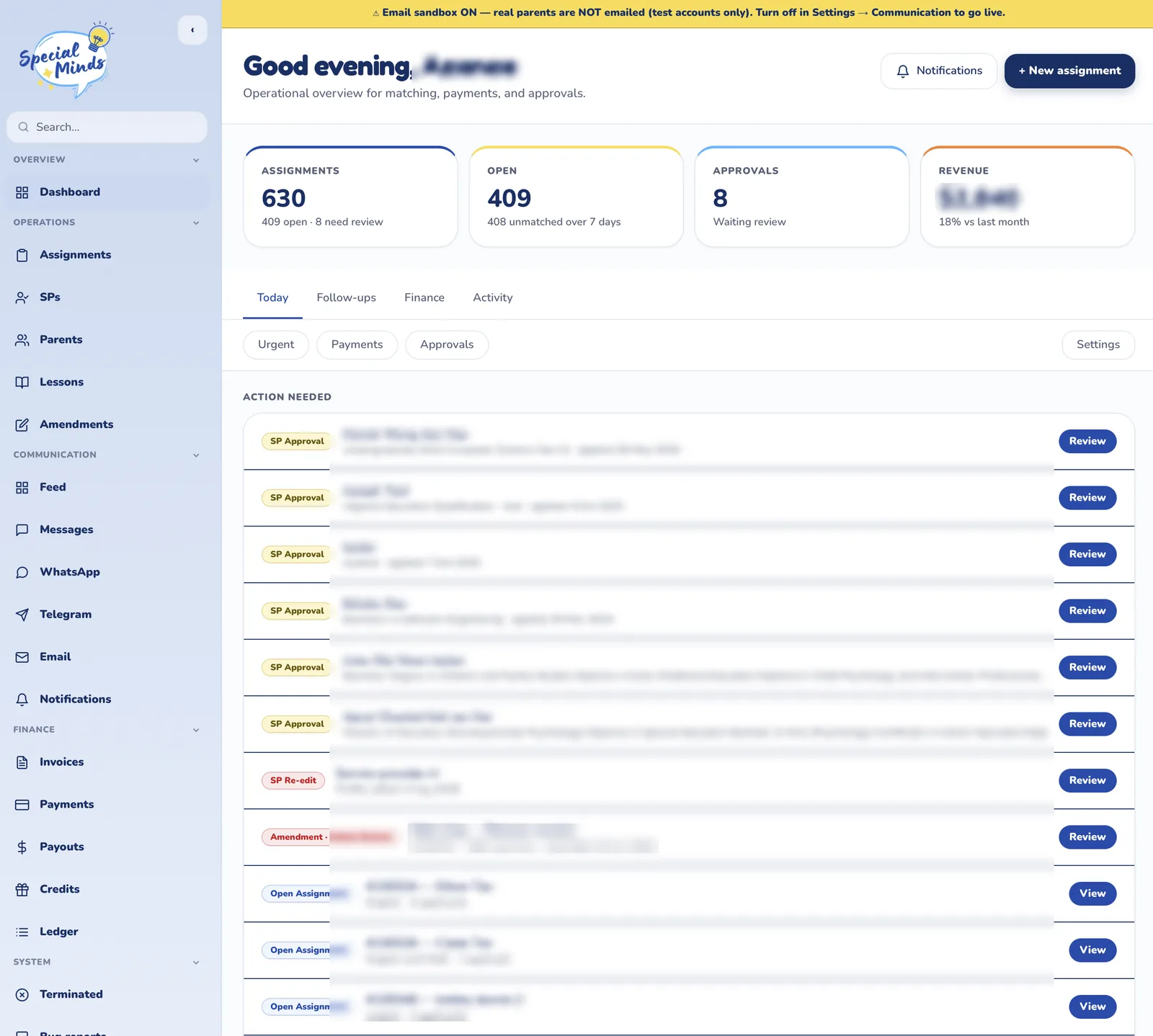
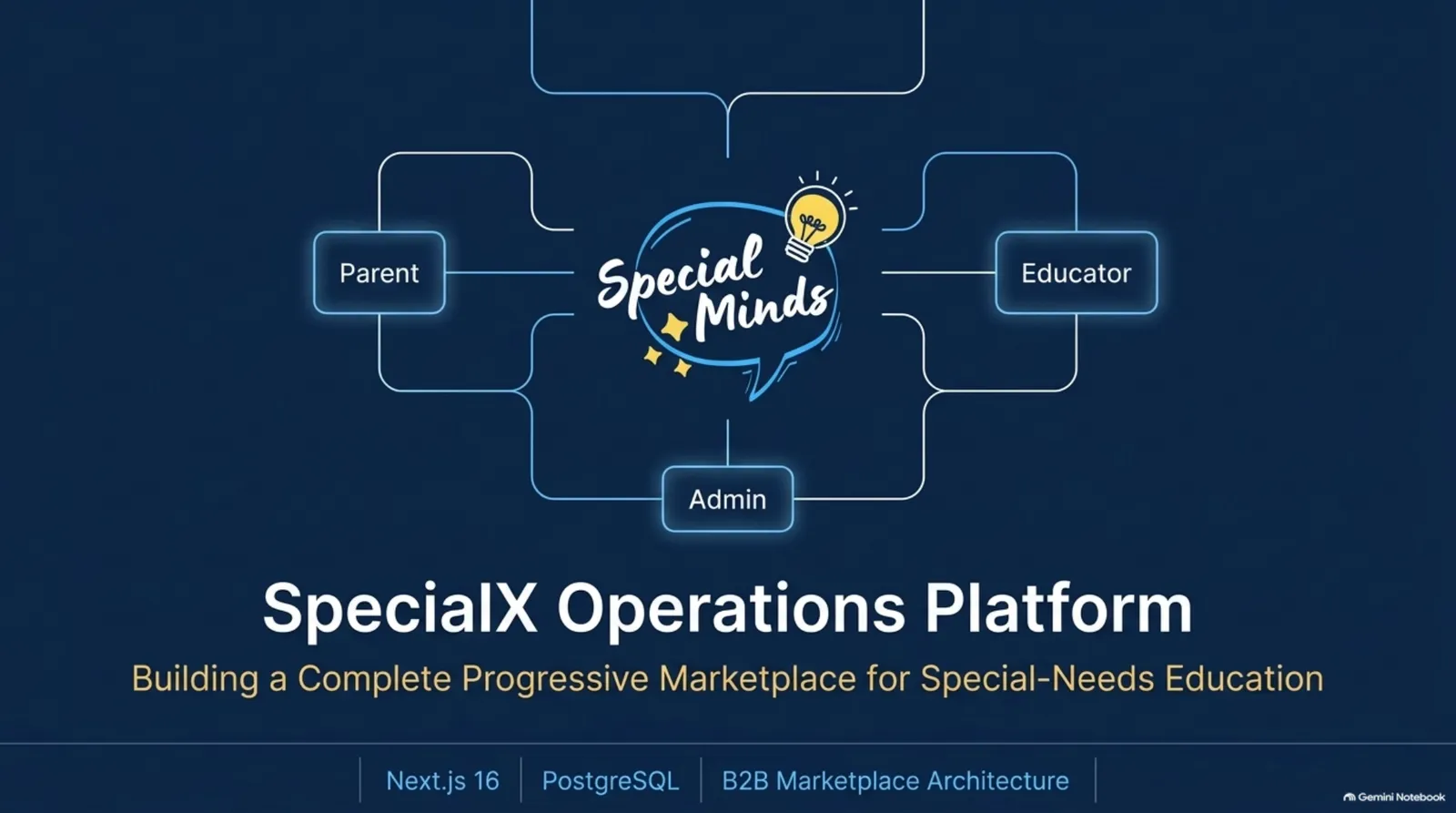
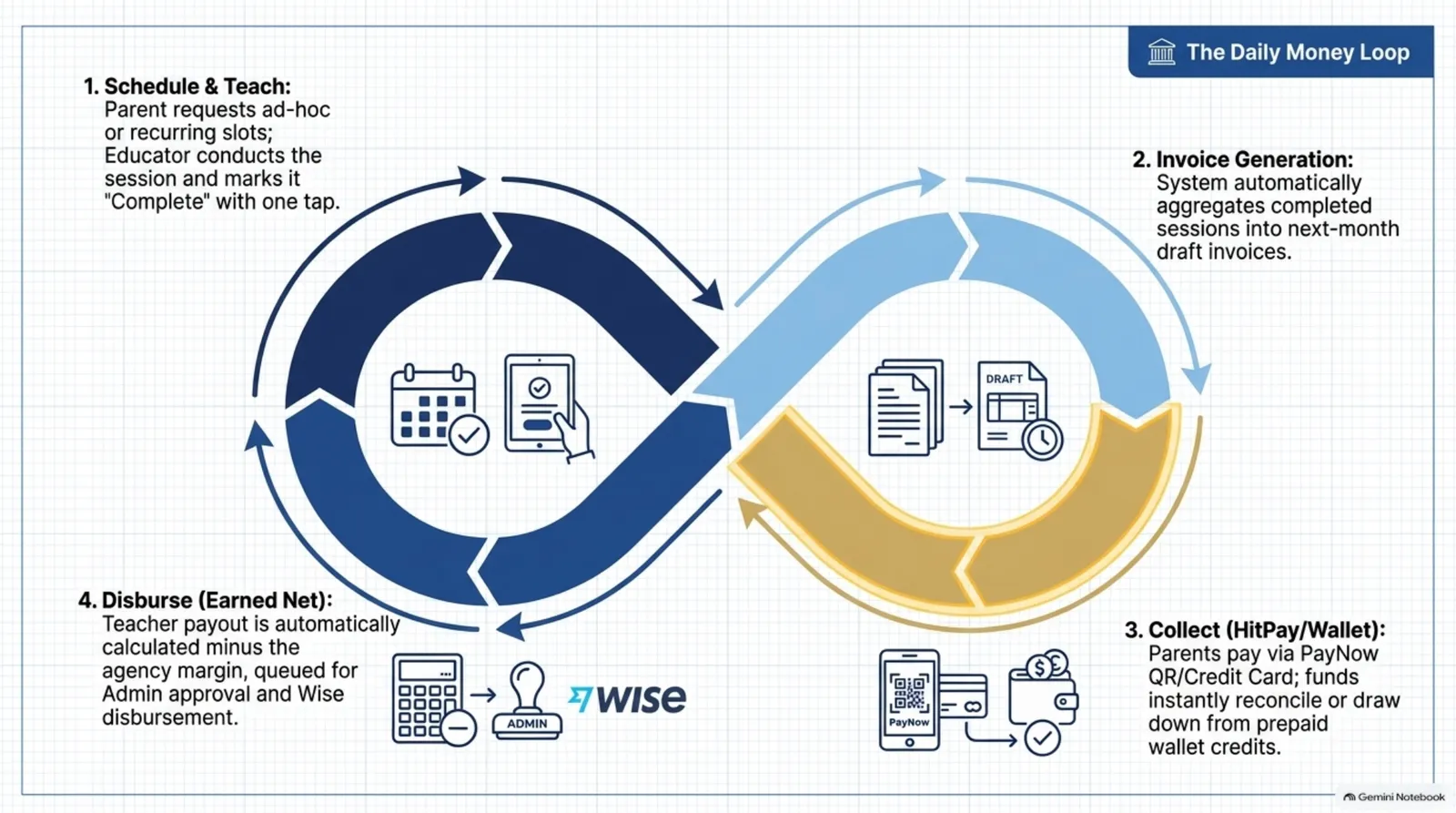
Special Minds matches families with professional tutors and therapists for children with special educational needs in Singapore, mostly one-to-one sessions at home. It now runs the whole service itself: sessions, monthly billing and tutor pay, on SpecialX, the operations platform Rezult built for it.
The Challenge
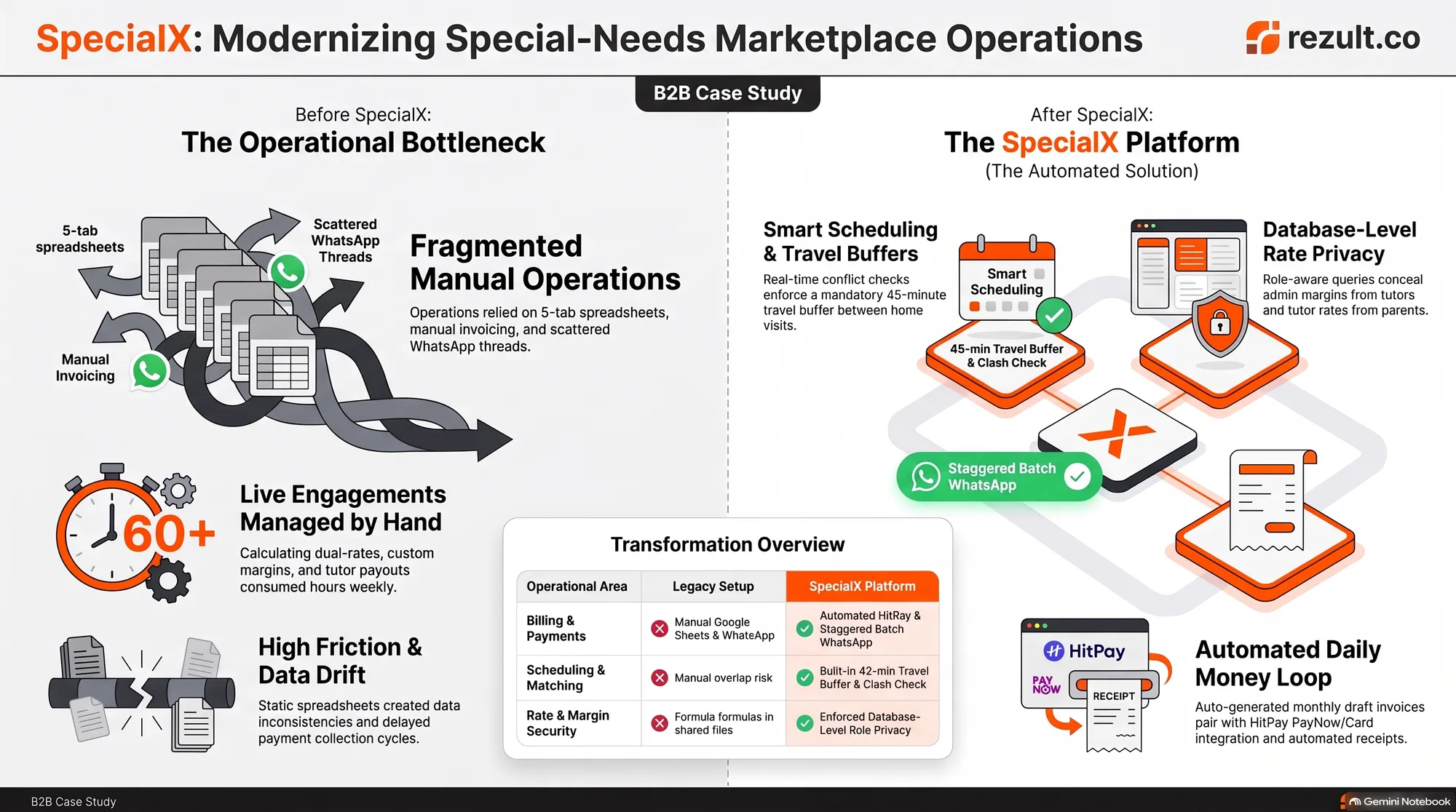
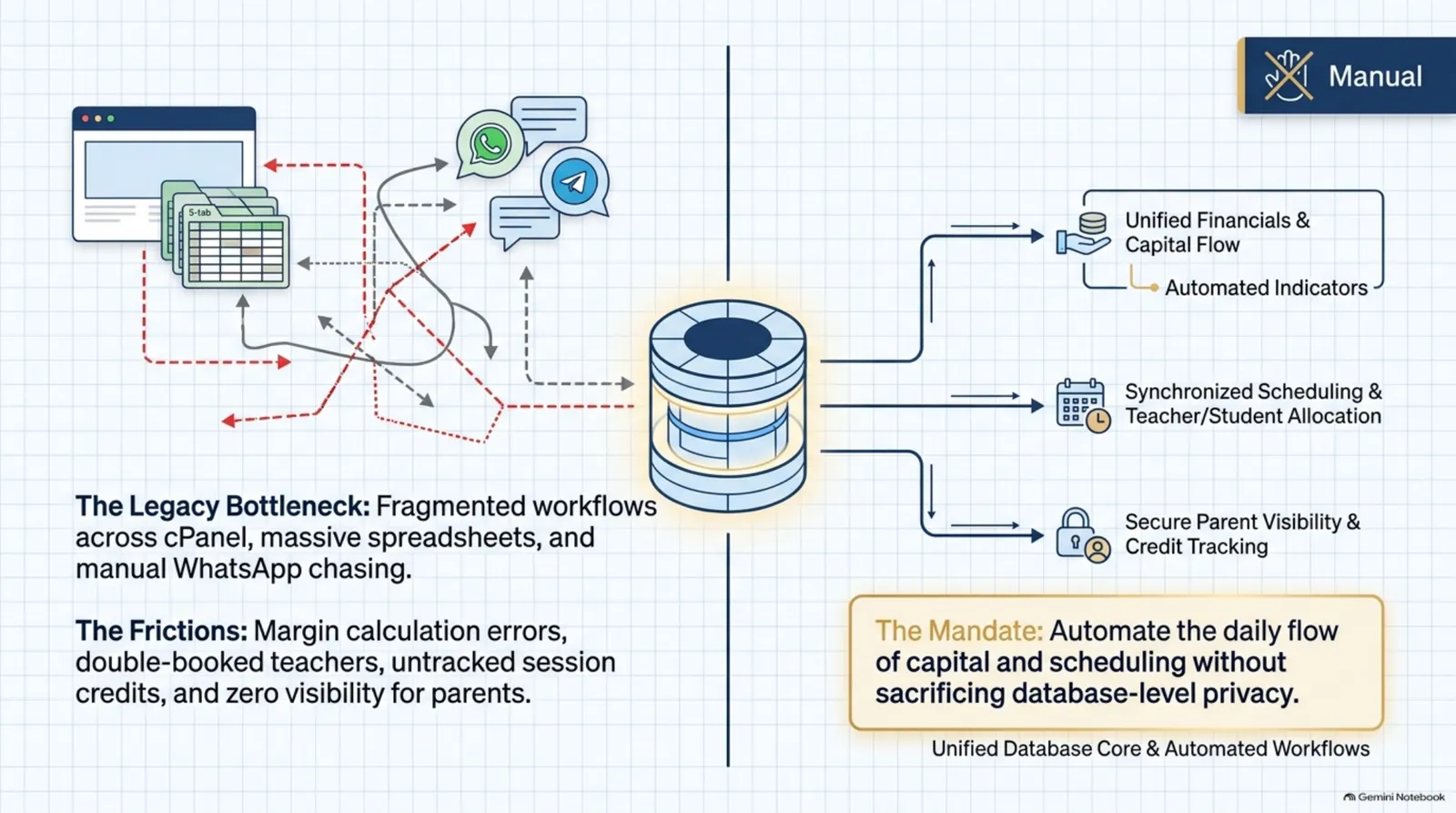
The business ran on a legacy admin, parallel Google Sheets, and WhatsApp and Telegram threads. Matching, confirming sessions, billing parents and paying tutors took dozens of admin hours a month, mostly chasing and reconciling by hand. Parents had no view of their sessions or credits, and the team wanted to move from matching-and-deposit to managing every session end to end.
Before & After
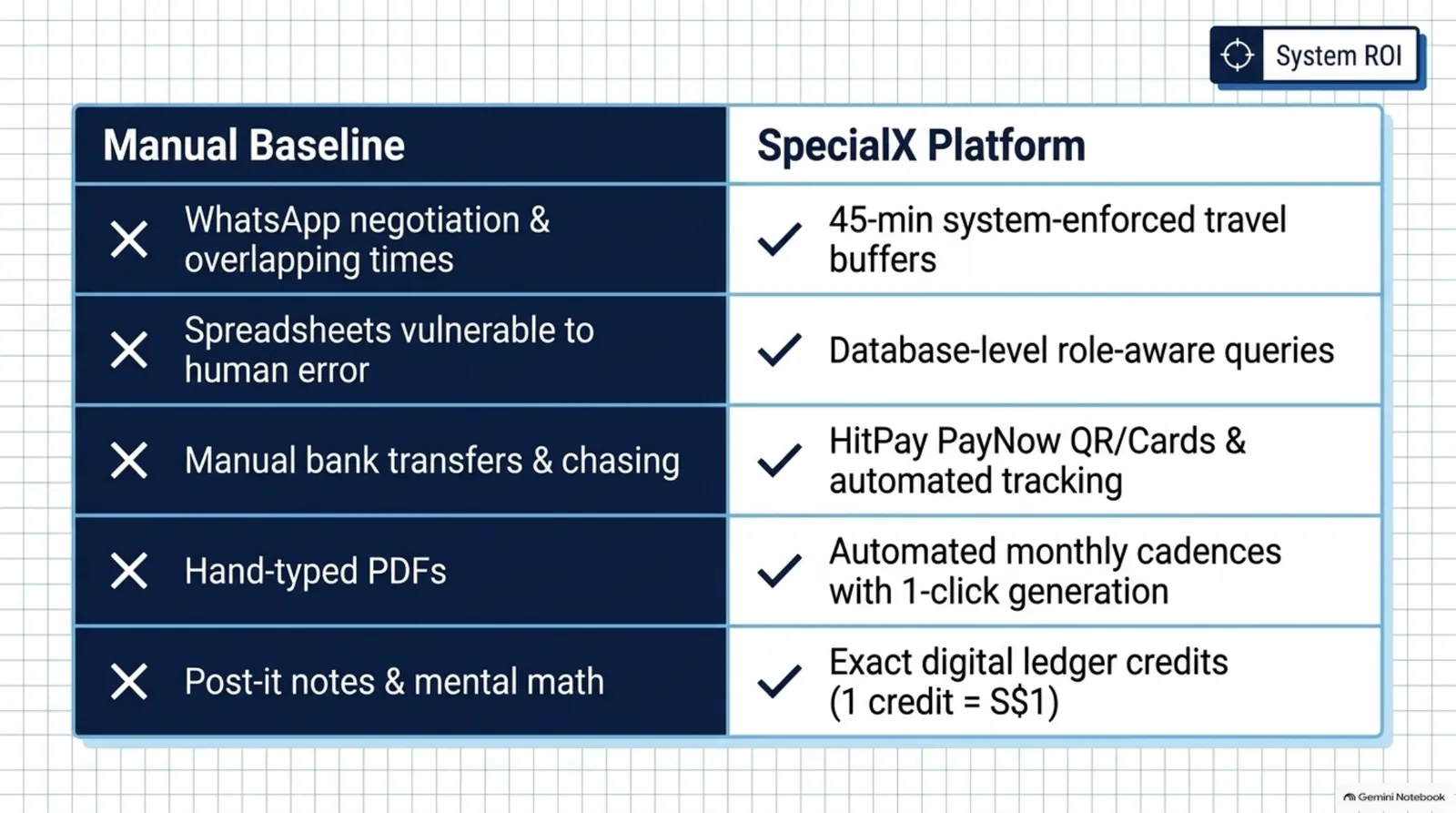
| Metric | Before | After |
|---|---|---|
| Monthly billing | Built by hand in sheets, chased one by one | Generated from completed lessons, sent in one paced run |
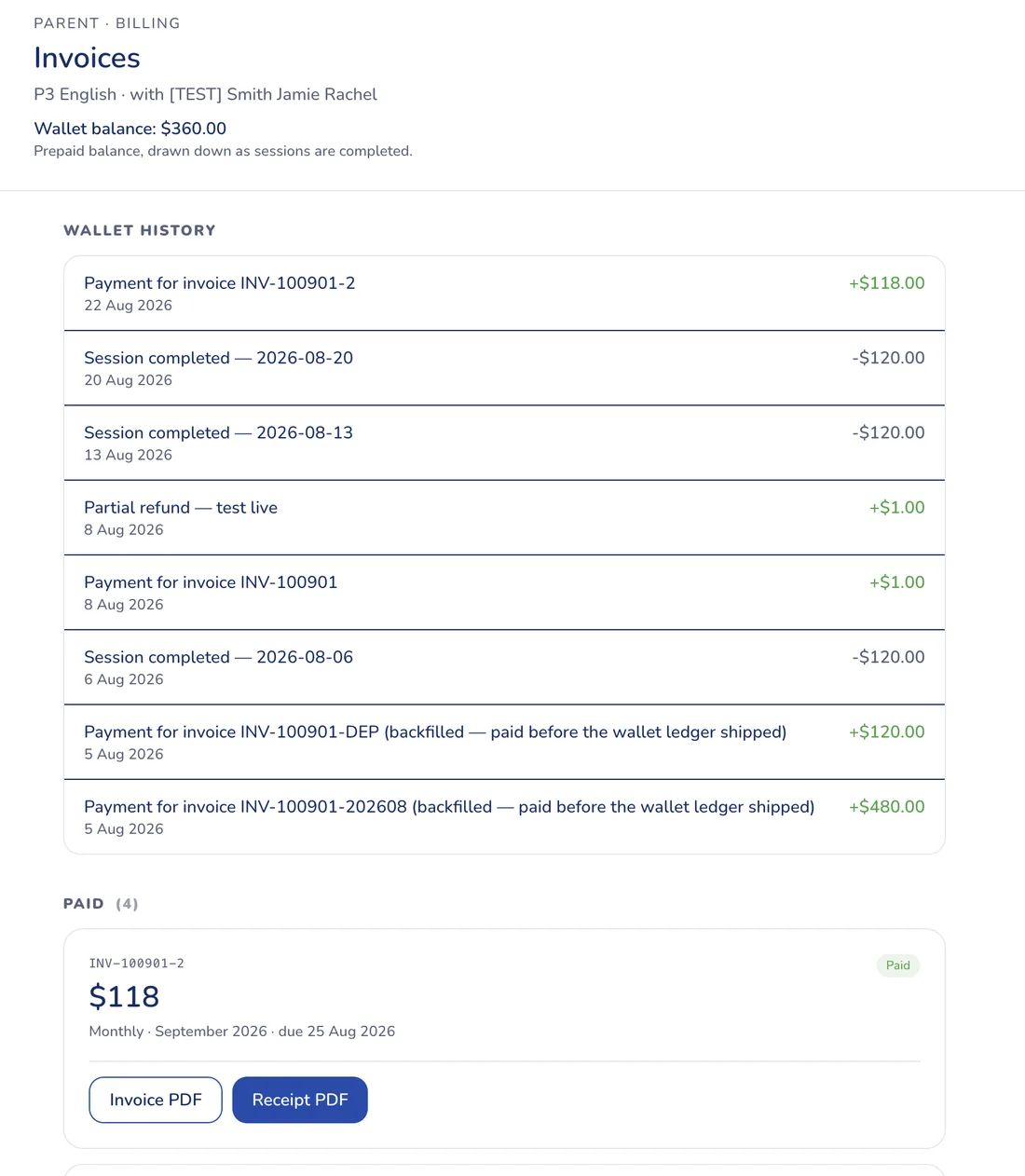
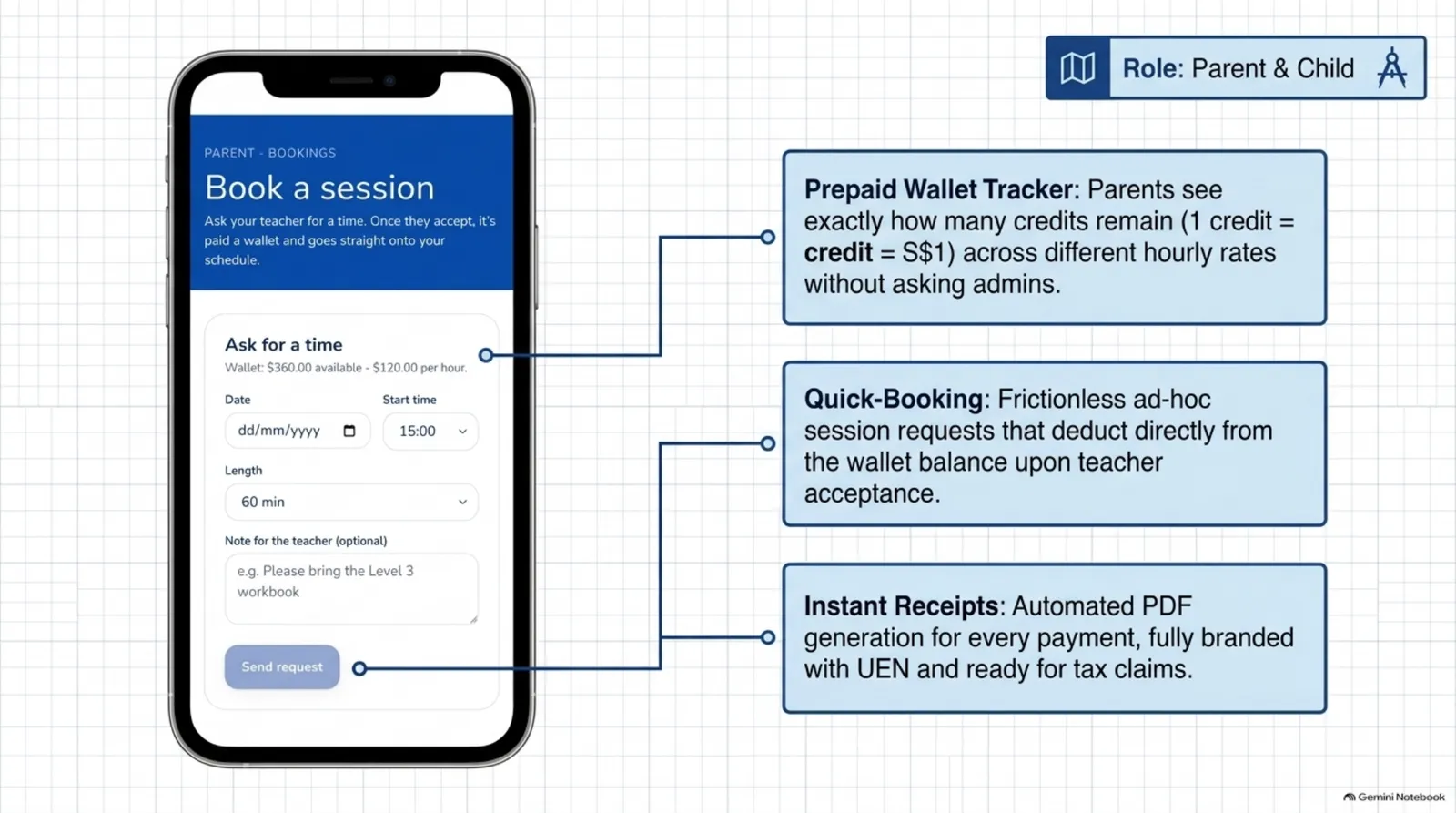
| Parent view | Ask the admin on WhatsApp | Own login: sessions, credits, invoices, receipts |
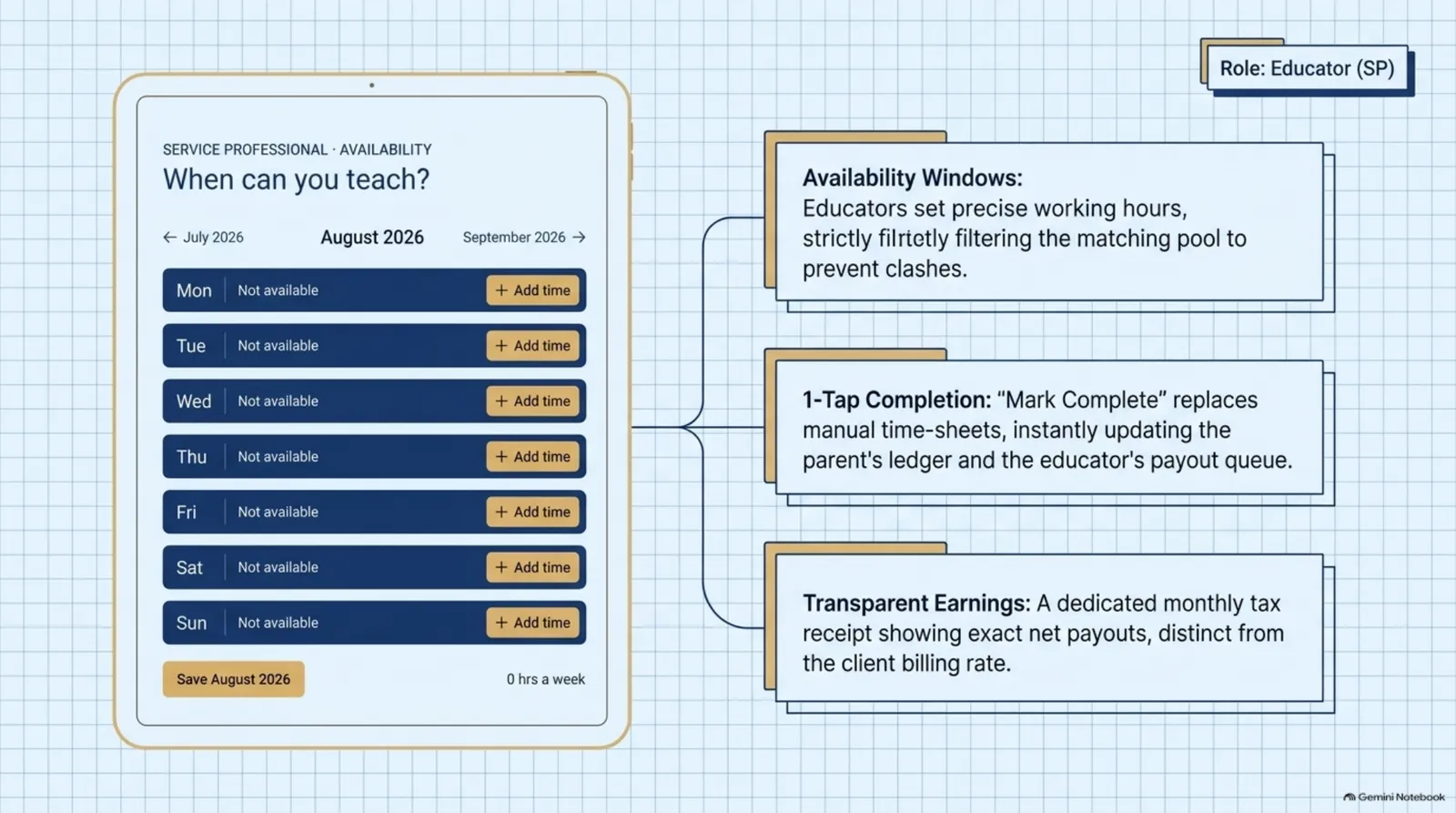
| Tutor pay | Calculated by hand | Calculated per lesson, admin approves, bank file exported |
| Tools in use | Legacy admin + Sheets + WhatsApp + Telegram | One app, installable on any phone |
Delivered in three paid phases plus a flat monthly running cost, so the agency could see each part working before committing to the next.
Our Process
We watched the team work and found the side spreadsheet where the real work happened: payouts worked out by hand, overdue invoices chased one by one. That became the phase 1 scope, under one rule: if it does not move, record or protect money, it waits.
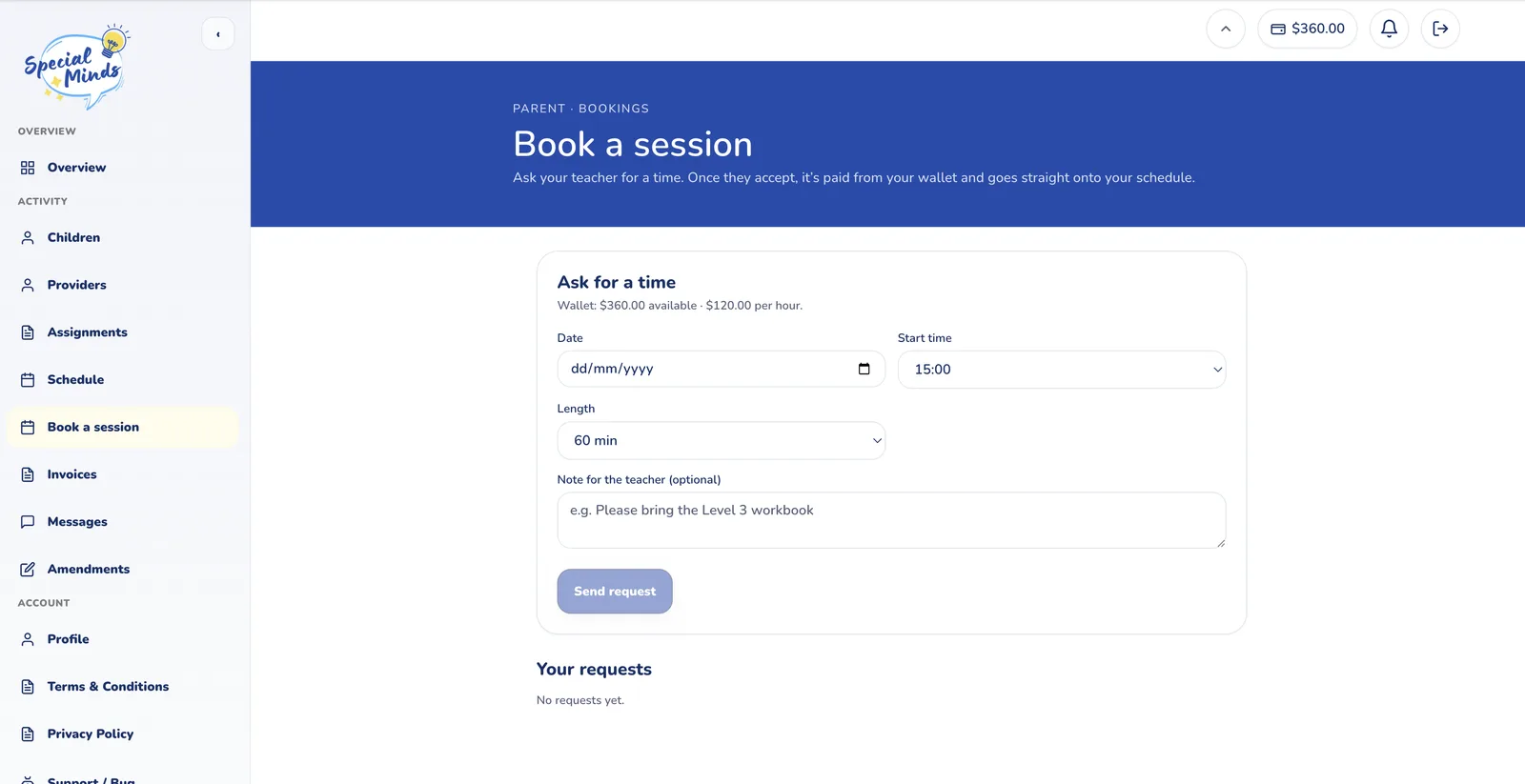
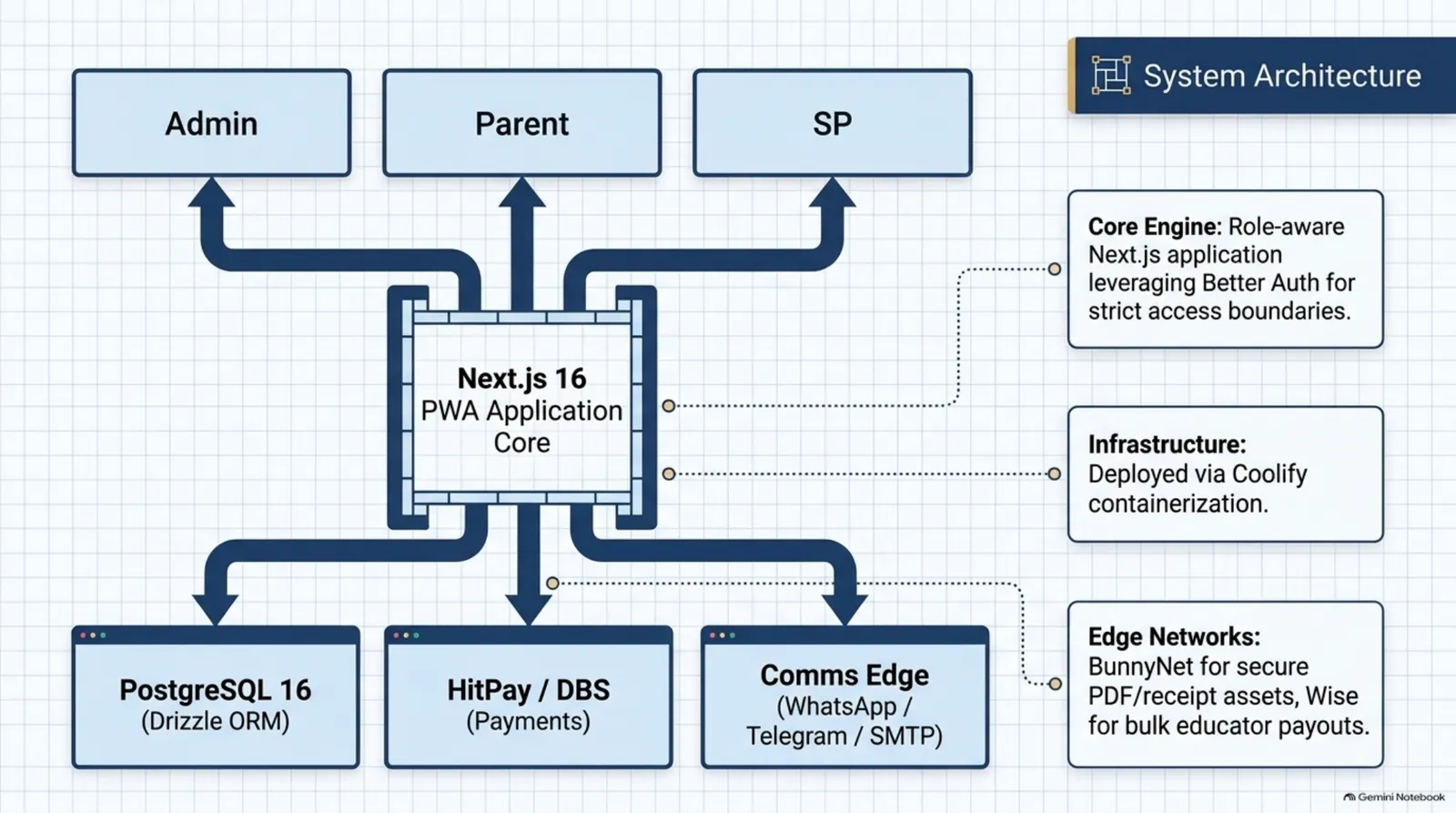
Phase 1 built the backbone as a progressive web app with three logins (parent, tutor, admin): the assignment as the central record, lesson records, invoices generated from completed lessons, PayNow QR and card payment links, calculated tutor payouts approved by an admin, and a full audit log. Each role sees only its own numbers, enforced in the database query, not hidden in the screen.
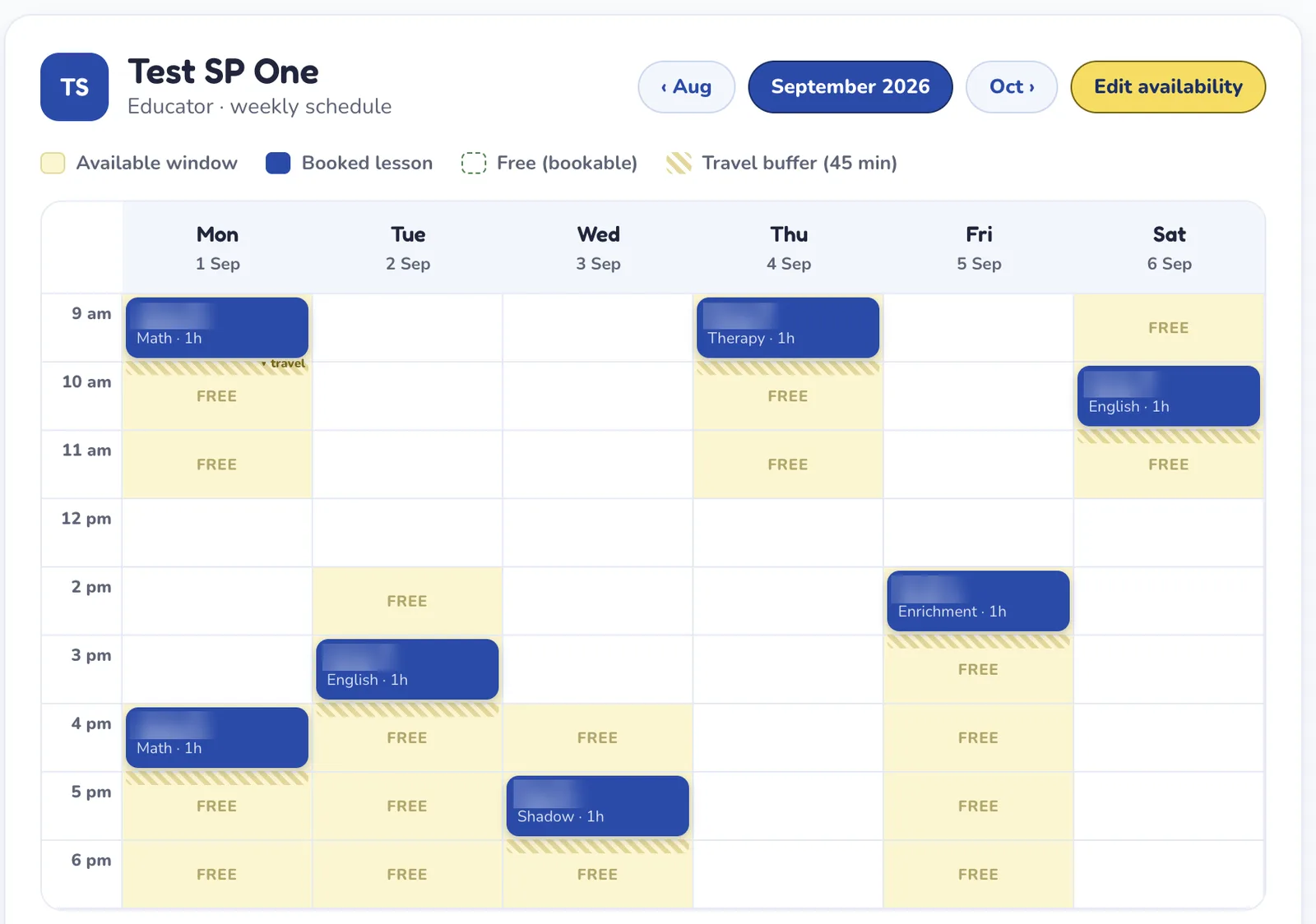
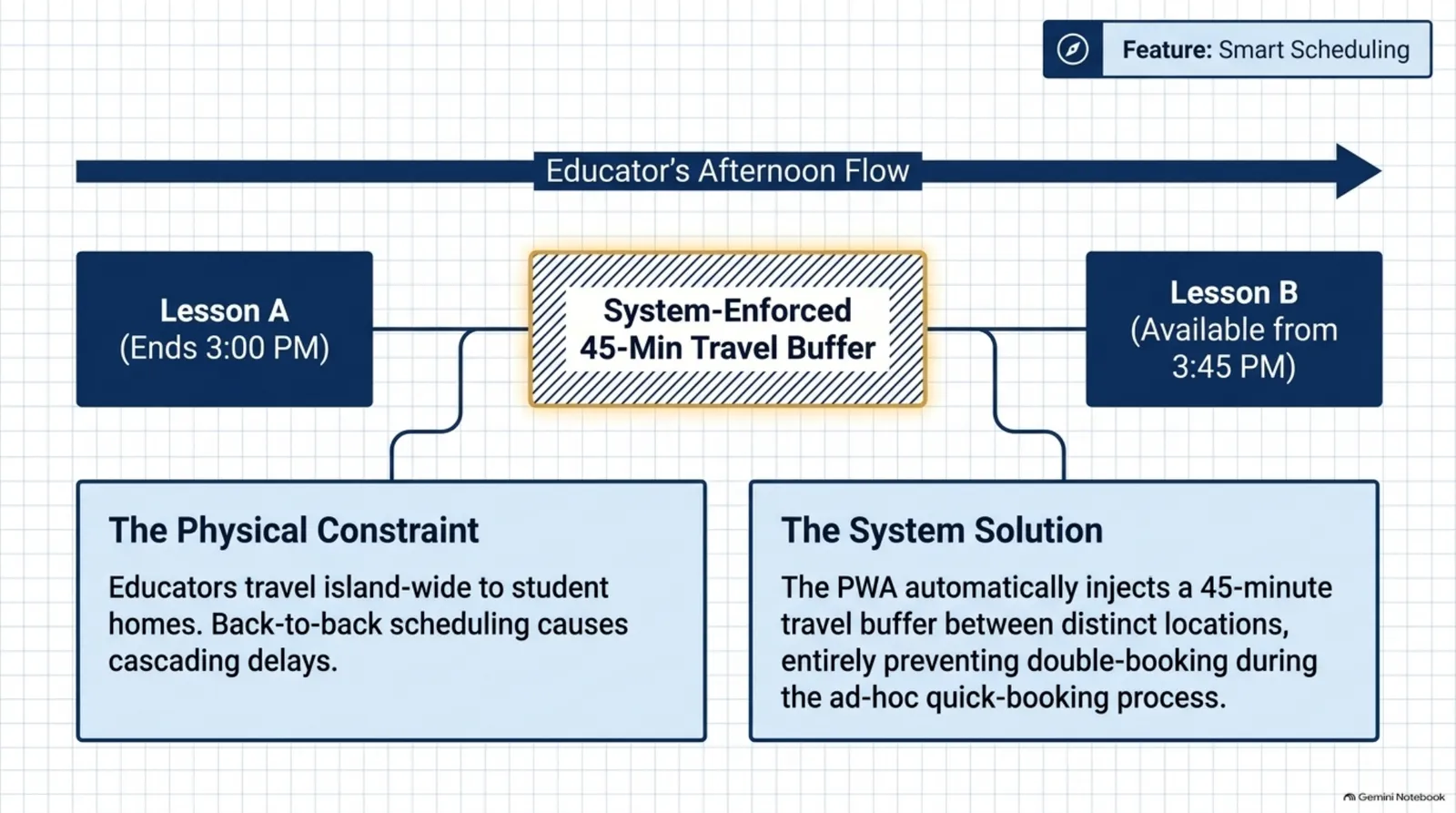
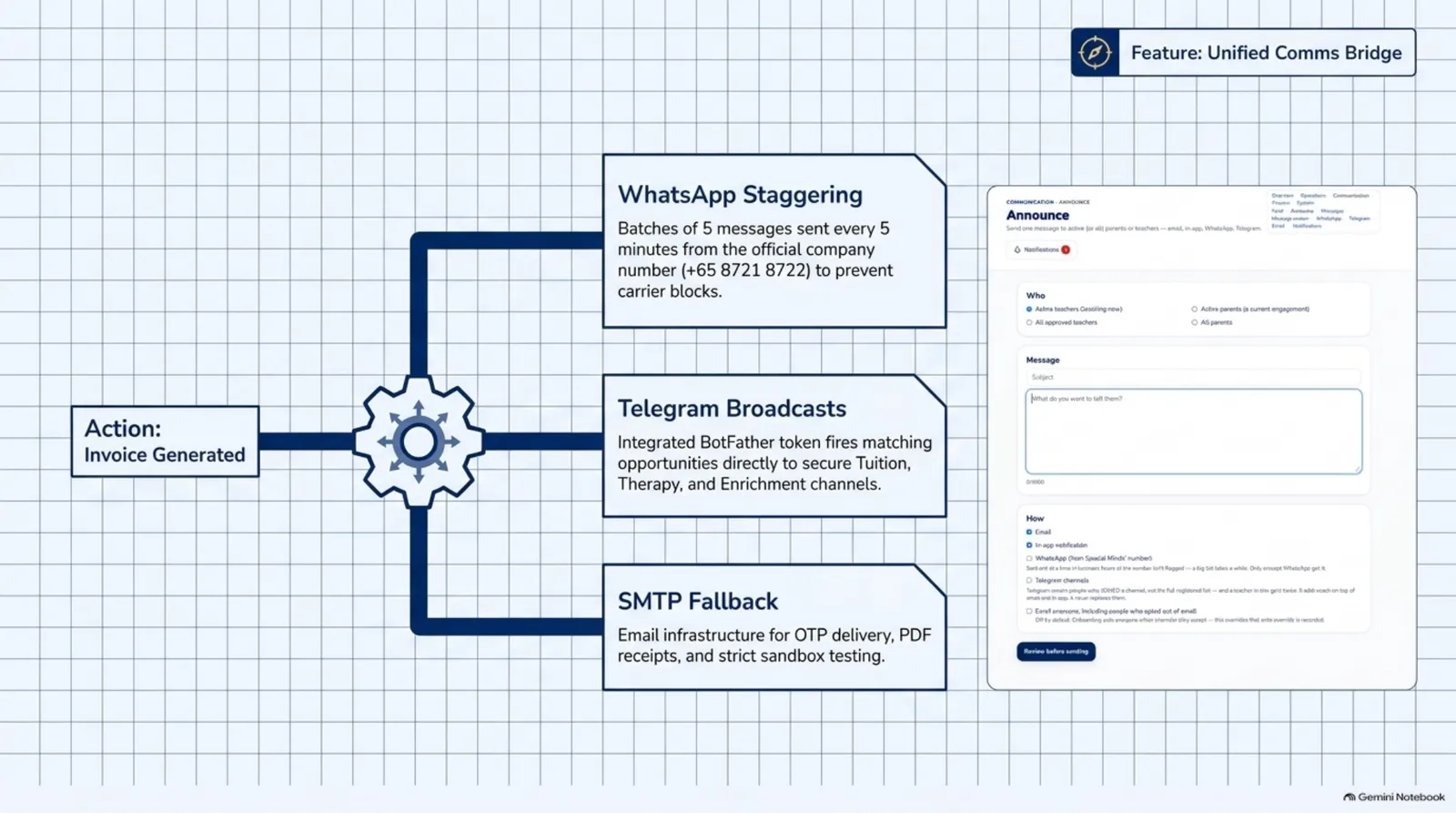
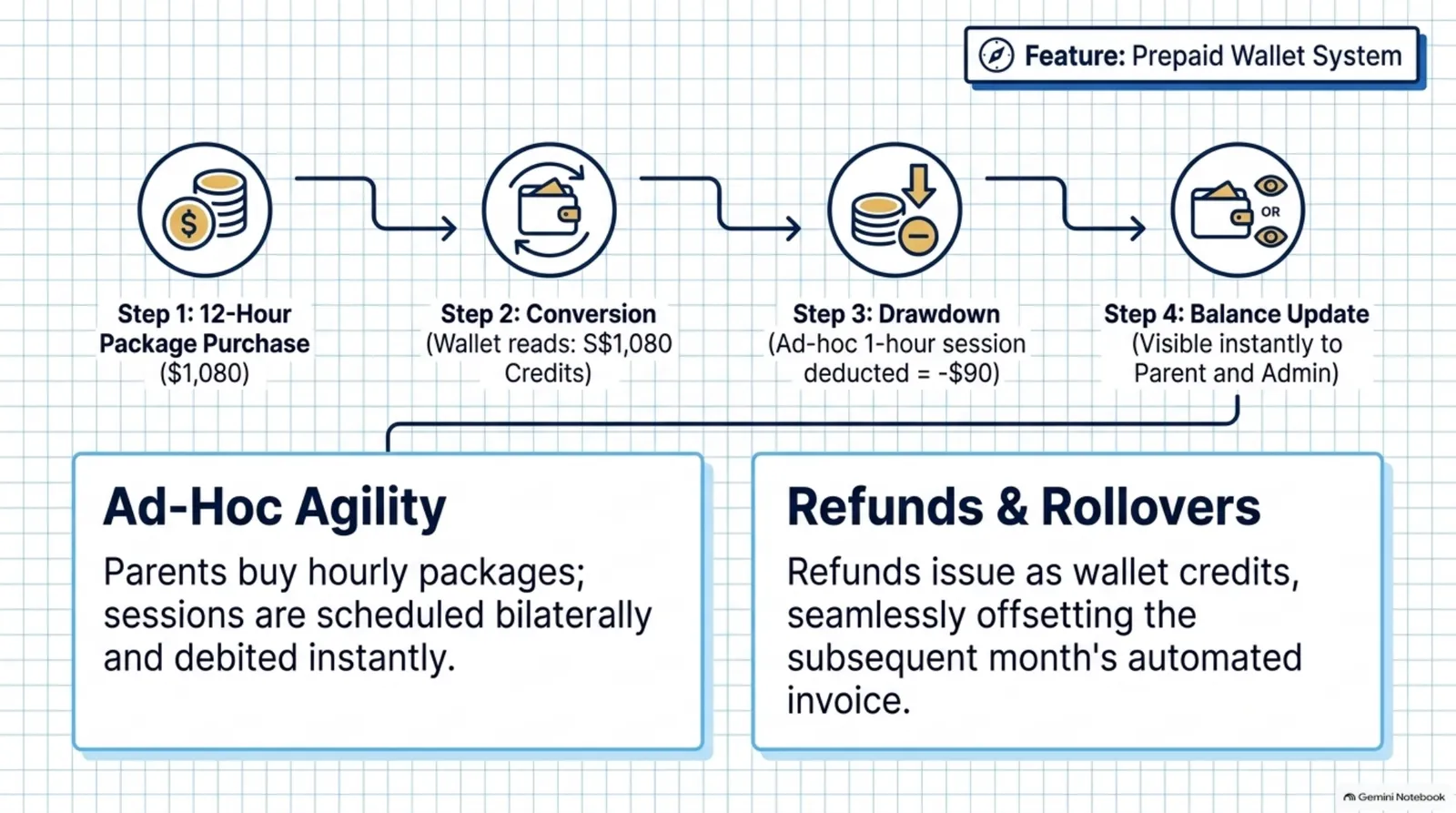
Phase 2 and 3 added what real use asked for: tutor availability and parent booking requests, prepaid credits netted on each invoice, insurance-ready receipts, WhatsApp invoice reminders paced through the day, a finance dashboard and bank payout exports. Money stays human-gated: nothing is charged or paid until an admin presses send.
Timeline
- MayFlow mapping with the team. Legacy data and the side spreadsheet become the phase 1 scope.
- Jun to AugPhase 1 backbone: roles, assignments, lessons, invoices, payments, payouts, audit log. Tested on real data with payments in sandbox and emails allowlisted.
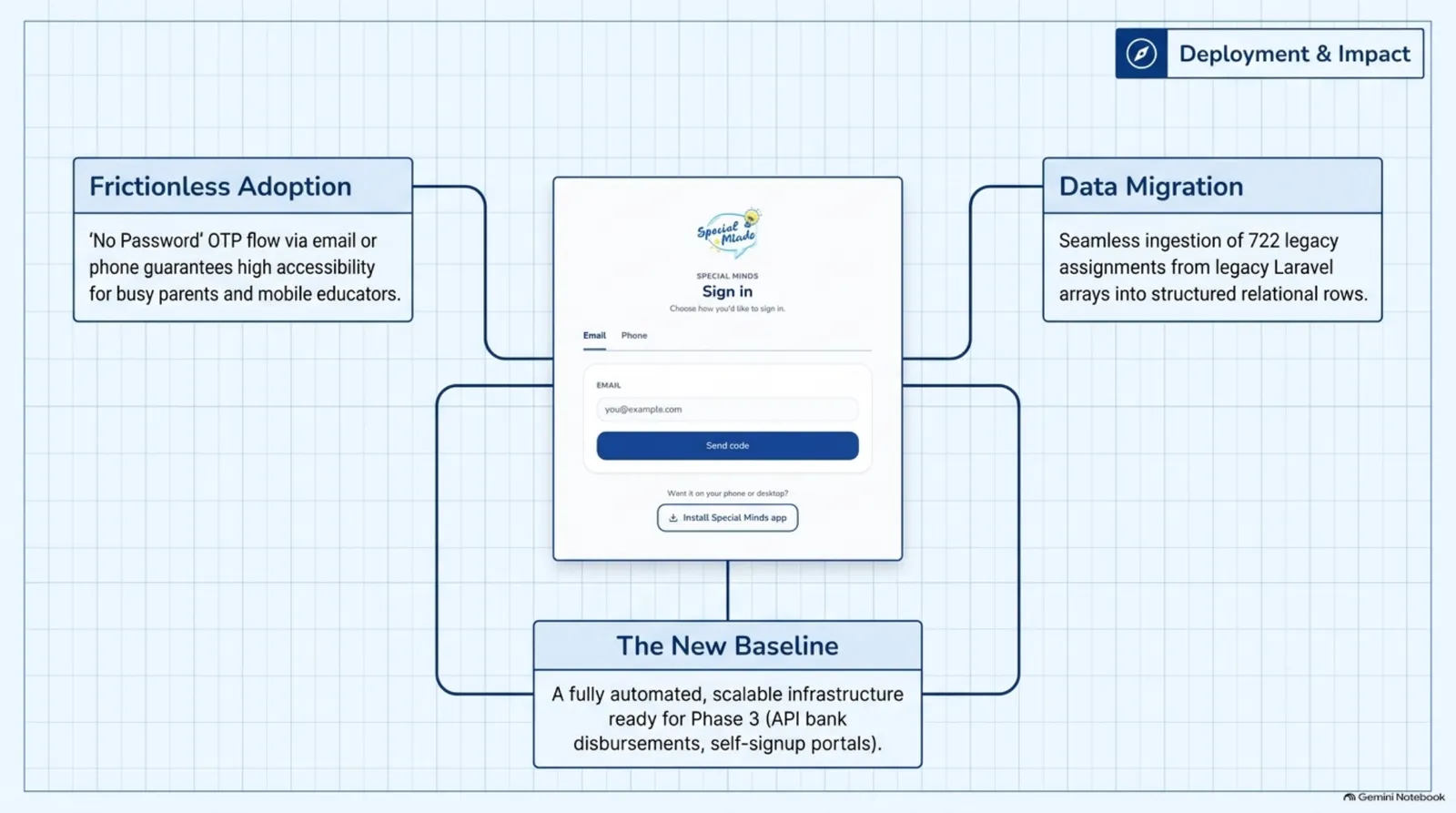
- SepPhase 2: scheduling, availability, prepaid credits, receipts, one-time-code login by SMS and email.
- OctGo-live. First full monthly invoice run sent from the app over WhatsApp. Finance dashboard, payout exports, health monitoring and backups.
- NextLive and growing. Each new phase adds what daily use asks for, such as self-signup portals and direct bank payouts.
Tech Stack
Self-hosted on a dedicated server with backups every 6 hours to off-site storage and uptime alerts to the team chat.
The 2026 Angle
In 2026 a small service business can own software that used to need an enterprise budget. AI-assisted development makes a custom platform affordable, and building it in phases keeps it shaped by real use instead of a guessed spec. Off-the-shelf tuition software fits standard centres; an agency with home visits, per-tutor rates and prepaid credits needed its own.
 macOS & iOS
 Windows
 Android
 Installable PWA
 Next.js
 TypeScript
 PostgreSQL
 Migrated from Laravel
 WhatsApp
 Telegram
 Email
 Wise payouts
 Claude by Anthropic
 OpenAI