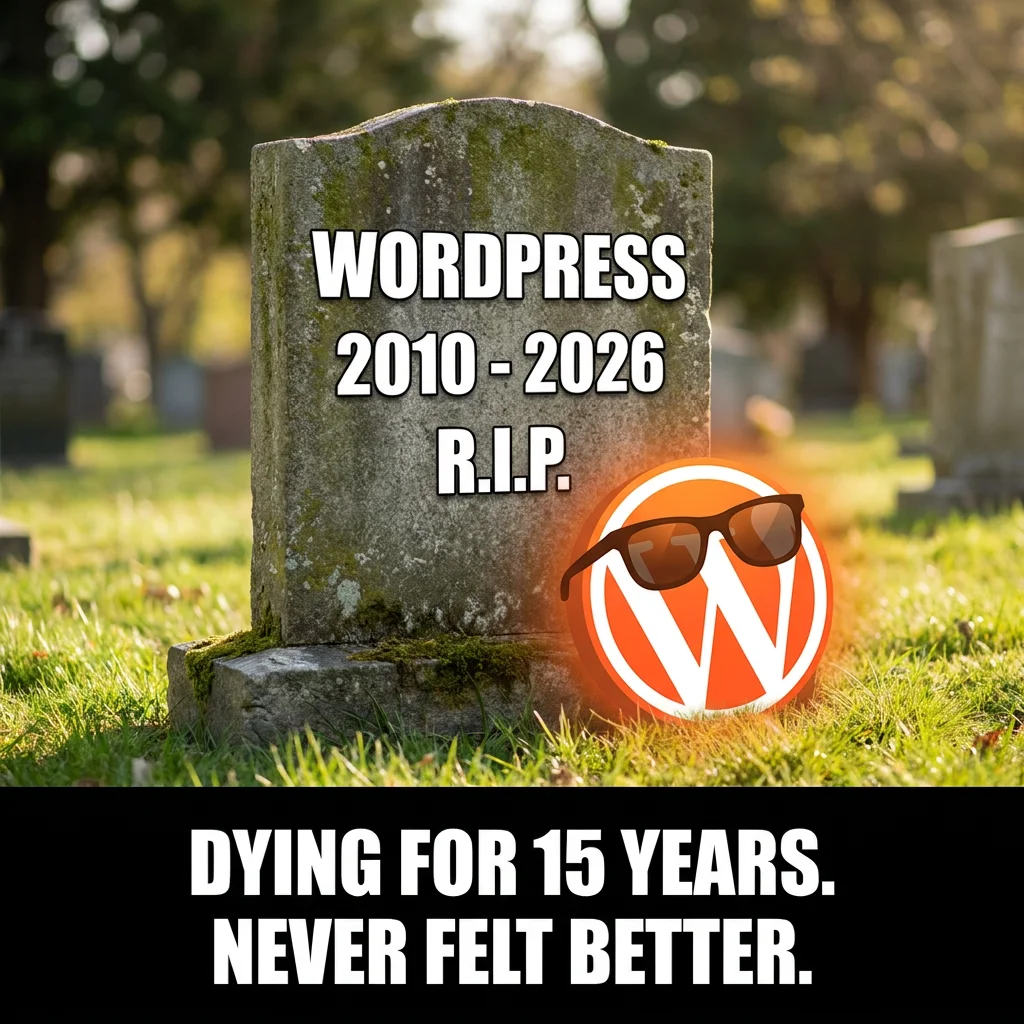
WordPress has been dying every year since 2010, if you believe the headlines. Yet here it is in 2026 still running about 41% of every website on the internet. That is not a corpse. That is the biggest thing on the web taking a small step back while everyone yells that it is over.
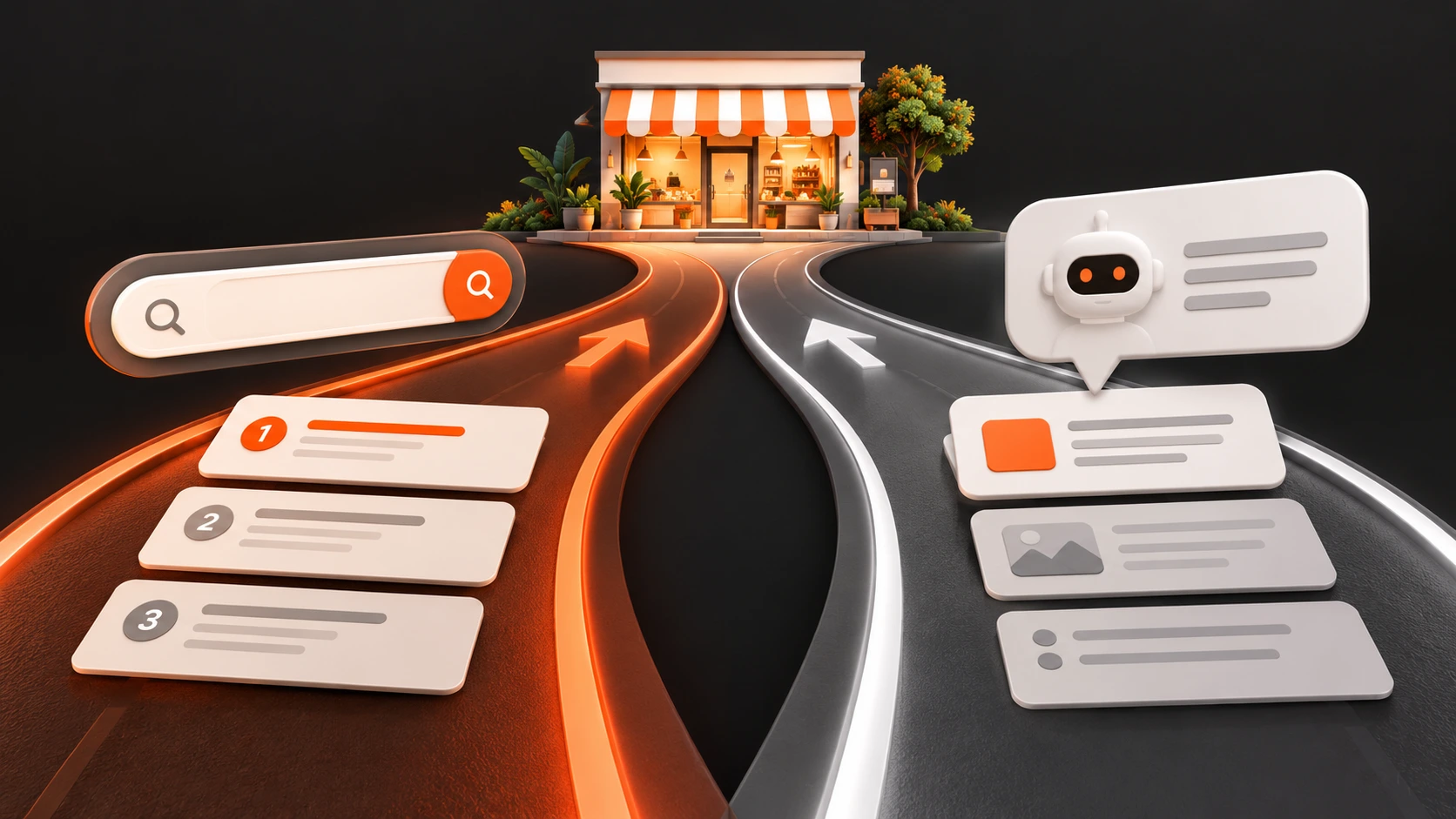
Here is the honest version, from someone who builds on it every week. WordPress did lose a little ground, and we will not pretend it did not. But it lost the cheap, throwaway end to drag-and-drop toy builders. At the serious end, where real businesses live, WordPress just got the best tooling it has ever had. New builders, and now AI agents that can build and manage a site by themselves.
Is WordPress actually dying in 2026?
Quick Answer: No. WordPress still powers around 41% of all websites and close to 60% of the CMS market in 2026. Its share slipped a few points over three years as toy site-builders grabbed the low end, but it is not dying. It got stronger where it counts. A new generation of builders (Bricks, Breakdance, Etch) plus the official WordPress MCP adapter now let AI agents build and manage sites directly. Open-source, owned by you, and now agent-native. That is the opposite of dead.
Let us kill the hype first. “WordPress is dead” is a headline, not a fact. The numbers say its share of all sites drifted from about 43% to 41.5% across seven months of 2026, and its CMS share went from roughly 65% to 60% over three years.
That is a real decline. We are not going to sell you hopium. But look at where it went. The sites leaving WordPress are the simple ones, a one-page brochure that Wix or a Shopify store now handles. Fine. Those were never the point.
What stayed, and what keeps coming, are the businesses that need to actually own and control their site. In our experience running builds for Singapore SMEs, the moment a client wants custom features, real SEO control, or a site they are not renting forever, WordPress wins the conversation every time.
Why “you own it” beats “you rent it”
This is the part the shiny SaaS builders do not put in the ad. When you build on Wix, Squarespace, or Webflow, you are a tenant. You pay rent every month, you build on their land, and the day they change pricing or shut a feature, you have no move. Ask anyone who watched their monthly bill jump for the same site they already built.
WordPress is open-source. You own the files, the database, the whole thing. Move it to any host, hand it to any developer, keep it running for a decade. No landlord. That is not a small detail, that is the difference between an asset and a subscription.
Cost-smart owners get this fast. A rented builder feels cheap at 20 dollars a month until you add three years and the plugins you cannot leave. An owned WordPress site is a one-time build plus cheap hosting, and it is yours. Same reason we tell clients not to build their whole business on someone else’s platform. Rented anything can be taken away.
The new builder ecosystem is the real story
People who think WordPress is old are looking at 2015 WordPress. The 2026 builder scene is a different animal, and it is mostly aimed at people who care about clean, fast sites instead of bloated ones.
- Bricks and Breakdance lead the modern pack. Both output lean code, build full sites header to footer, and give real design control without the mess older builders left behind.
- Etch is the newer lightweight option, small but sharp, for people who want clean markup.
- Oxygen is still around, mature and stable, though the momentum moved to Bricks and Breakdance.
- GreenShift and the block-first tools push performance and animation straight on top of the native block editor.
None of this is drag-and-drop toy territory. It is fast, it is developer-grade, and it does not have to look flashy to work. A site that is simple, clear, and quick beats a 3D cinematic mess that takes six seconds to load, every time. We build on Bricks for exactly this reason. Clean output, full control, no rented platform underneath.
The thing nobody saw coming: WordPress got agent-native
Here is what actually changed in 2026, and it is bigger than any builder. WordPress became something AI agents can operate directly.
In February 2026 WordPress shipped the official WordPress MCP adapter. In plain terms, it turns WordPress functions into tools an AI agent can call. An agent like Claude can now discover what a site can do, read its content, and make changes through a clean protocol instead of guesswork. By March, WordPress.com let agents like Claude, ChatGPT, and Cursor create, edit, and manage content on a site through plain conversation.
This is not a demo. We already run it. Our team connects an AI agent straight to a client’s WordPress and builds pages, updates content, and fixes SEO by talking to the site. The CMS that people call old is the one that just became the easiest for AI to actually work on.
Think about what that means for the “dying” story. Every AI tool needs somewhere to publish. The platform that made itself the most agent-friendly, open-source, and owned is not the one on the way out. It is the one everything else now plugs into.
Frequently Asked Questions
Is WordPress still worth using in 2026?
Yes, for any business that wants to own its site instead of renting it. WordPress runs about 41% of the web, it is open-source so you keep full control, and the 2026 builder and AI tooling make it faster to build than ever. For a throwaway one-pager, a simple builder is fine. For a real business asset, WordPress still wins.
Is WordPress losing market share?
Slightly. Its share of all websites drifted from around 43% to 41.5% during 2026, and CMS share moved from roughly 65% to 60% over three years. The losses are mostly at the simple end, to hosted site-builders. At the serious, custom, own-it end, WordPress remains dominant.
What is the best WordPress builder in 2026?
For clean code and full control, Bricks and Breakdance lead the modern pack, with Etch as a lighter option. Older builders still work but produce heavier sites. We build client sites on Bricks for lean output and real design control without locking into a rented platform.
Can AI build a WordPress site now?
Yes. The WordPress MCP adapter (2026) lets AI agents like Claude read and operate a site directly, and WordPress.com now lets agents create and manage content through conversation. We already use this to build and update client sites with an AI agent connected straight to WordPress.
The verdict
WordPress is not dying. It is shedding the low-value sites it never needed and getting stronger where the money is. Open-source, owned by you, a serious modern builder ecosystem, and now the friendliest CMS on earth for AI agents to actually work on.
Ignore the yearly funeral. The platform that runs 40% of the web and just became agent-native is not the one you should bet against. If you want a site you own, built fast on modern tooling, that is exactly what we do.
Want a WordPress build you own outright, done on clean modern tooling? Reach out at [email protected].
Reviewed and fact-checked by Bobby Dennie, Rezult — [email protected]