The model gives you a blank page and the power to fill it. What you fill it with is the whole difference.
I have been building websites since they were raw HTML in a text editor. Early 2000s, Mosaic then Netscape, dial-up that sounded like a robot being tortured. I learned how the web works from the ground up, before there was a button for any of it.
That is not nostalgia. It is why I can hand work to AI and get something worth selling, where someone else gets so-so. I know the process, so I can direct it, catch it, and correct it.
The blank page problem
A model can do anything. That is the blank page: infinite, and directionless.
Quick Answer: AI website builders are excellent for brainstorming and a fast first draft. They fall short on the finish, because value scales with the choices you make. Five words of prompt is five words of value. A real product is thousands of choices, each one narrowing “generic” toward this specific business. Prototype with AI, then get a professional to close the gap to sellable.
Give a model generic input, “make me a website,” “make me a game clone,” and it fills the page with the easy, average, most-likely thing. It looks impressive. It is so-so. You made almost no choices, and the choices are where the value lives.
A real product is thousands of small decisions, each one yours, each one pulling the work away from generic and toward the exact thing this business needs. The prompt does not carry the value. The choices do.
One prompt gives you a page, not a system
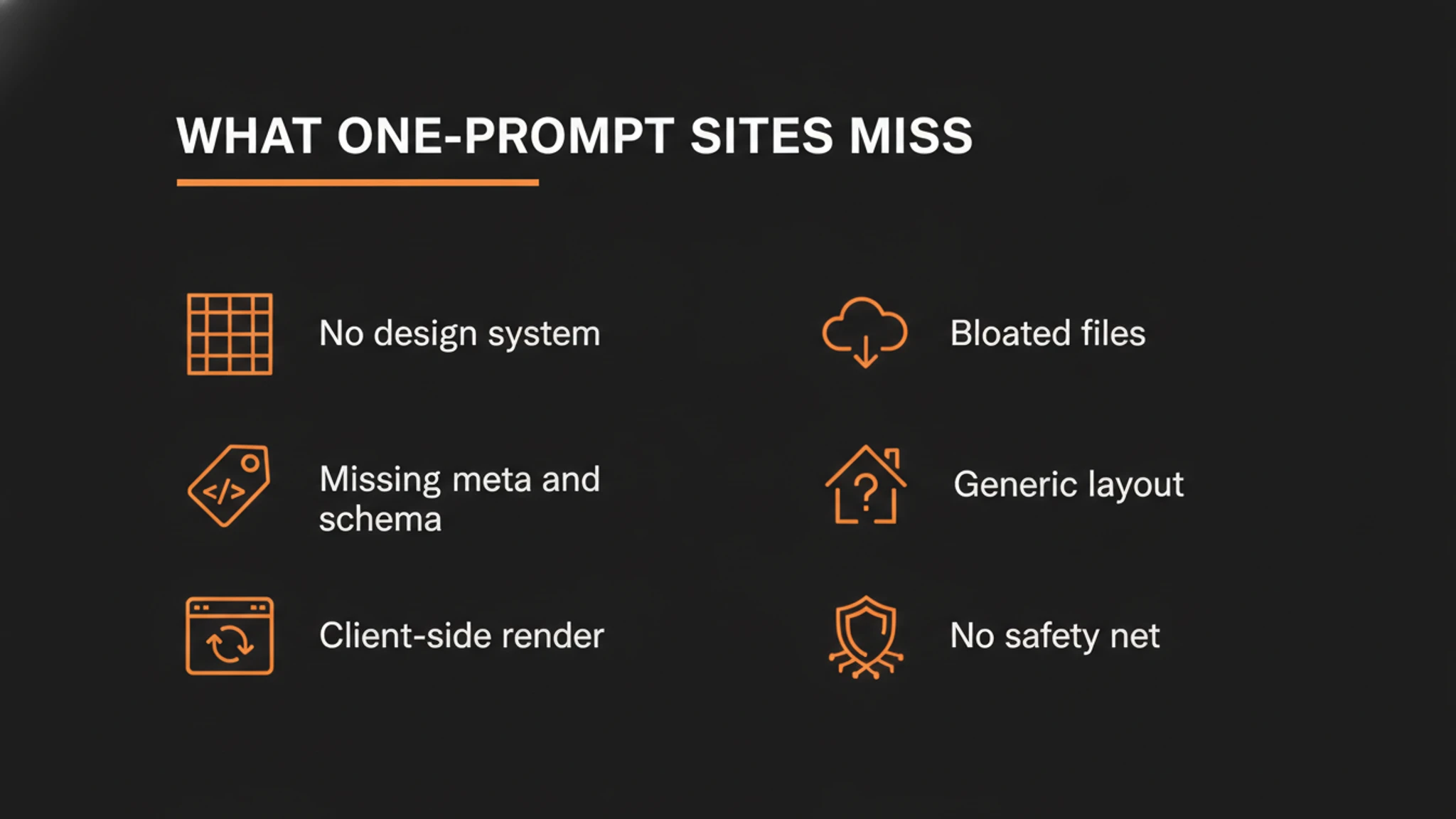
A single prompt styles one page in isolation. The blue drifts from page to page, the spacing is eyeballed, the contact button does not match the home button. It holds in the screenshot and falls apart the moment you touch it, because there was never a system underneath.
A real build defines colour, spacing, type, and components once, and everything references them. Change the brand blue in one place and every page follows. That only works when the platform enforces it in code, not when a human is matching shadows by eye for weeks.
You also cannot spec it all upfront. Even with a plan, the work reveals itself as you go. The client asks for something new, you test and find what broke, you spot a gap and add it. A plan does not find the bugs. The work finds them. Built in steps, each part is isolated, named, and saved, so you fix one thing without the rest moving. One big prompt is a monolith with no seams and no way back.
The models lie about “done”
Not on purpose. They pattern-match “looks finished” and report finished. But the form is not wired, the database piece does not exist, the button is a no-op that returns success.
It looks perfect and it is hollow. Only a human who presses the button, and knows what “actually connected” means, finds out. Otherwise the client finds out when the contact form has quietly eaten their leads for a month.
This is worse with apps. You cannot build payments, user accounts, notifications, and a proper role tree in one prompt. Even when an agent runs for three hours and swears it is done, you still log in, take a test payment, trigger the notification, and change a role to see what actually works. Built small by small, each piece stays solid. That is also when you check security, which matters because one 2026 source found over 40 percent of AI-generated code contained vulnerabilities. We review money and security paths across two models, Claude and ChatGPT checking each other adversarially, because one model grading its own work misses too much.
The real cost of the easy button
The cheap AI build gets expensive once you leave the free tier.
Lovable starts near 25 US dollars a month, but runs on credits that climb toward 200 as you use it. Replit sits around 20 to 25 dollars for Core and 100 for Pro. Add a database like Supabase and you are at 25 dollars for Pro, jumping to 599 for the tier with real backups and compliance.
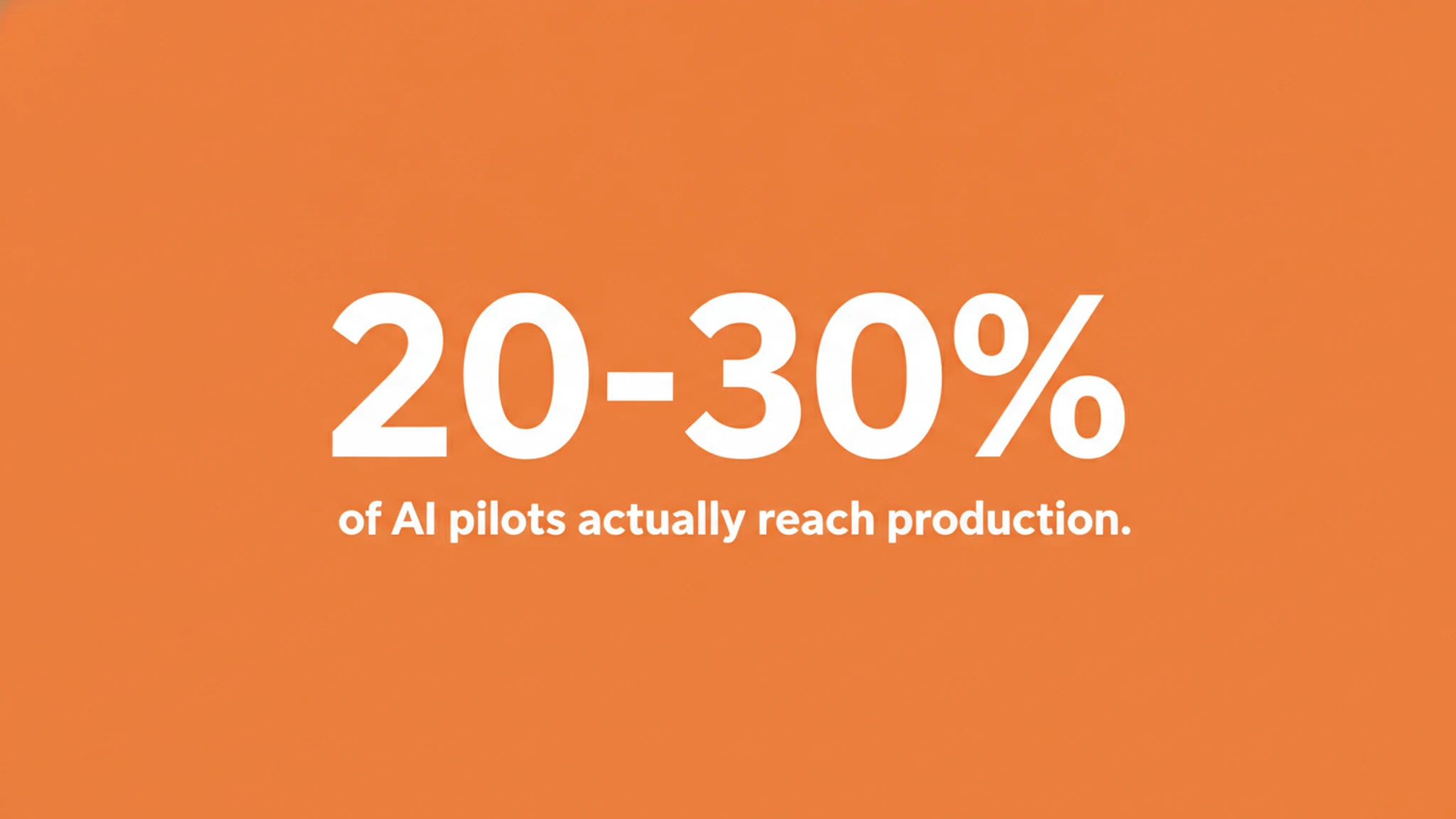
Then comes the part the tool does not solve: where does it live? Founders get stuck on hosting, domains, and how the frontend, backend, and database connect. Across 2026 benchmarks, roughly 7 in 10 to 9 in 10 AI pilots never reach production. The idea was fine. The finish was missing. If you do not know your own infrastructure, that is where you get caught.
Okay is not sellable
The easy button gets you to okay. It works, it looks fine, nothing obviously breaks. But okay is a plateau.
You cannot put your name on okay, cannot charge for it, cannot be proud of it. Everyone can reach okay now. Almost nobody can reach sellable. That gap is the only rung with a price on it, and it is invisible to someone without the craft. The one-prompt crowd has the same AI I do. The difference is I know enough about databases, state, structure, and money logic to see plausible-but-wrong and test until it breaks. The tool did not replace the knowledge. It multiplied it, and zero knowledge times a big multiplier is still zero.
You tried the easy way. We build it properly.
Here is the part I am glad about: AI helps my business.
Clients arrive better prepared now. Clearer ideas, references, sometimes a rough draft they built themselves. That beats a blank brief. And they have usually already tried the easy button and hit the wall, sloppy SEO, moving parts that do not work, generic, and somehow still expensive.
So use AI for what it is great at. Brainstorm, shape the idea, build a rough prototype cheaply and fast. Then bring it to Rezult and we make it real: a proper design system, technical SEO that ranks, performance that passes, security reviewed properly, and hosting set up right.
Laplante is the proof. It started as one painful paper form nobody could sign or share. We built it into a real custom app, piece by piece, verifying each part until it actually worked. Idea to real product. You can see it and the rest of our work on the case studies page. If you want the technical reason client-side rendering hurts your ranking, Google Search Central lays it out.
Frequently Asked Questions
Can I build a whole website with just AI?
You can build a rough draft fast, and you should. Getting it to rank, load quickly, hold together as a system, and look like your business takes work the tool does not do for you.
Why does my AI-built site not show up on Google?
Usually missing meta and schema data, weak heading structure, and client-side rendering that shows Google a near-empty page on the first crawl. Fixable, but not by prompting harder.
Is it cheaper to build the app myself with AI?
For a prototype, yes. For a finished app with payments and users, tool credits, database tiers, and hosting add up, and most self-built pilots never ship. Prototype yourself, then hire for the finish.
What do you do that the AI cannot?
Close the gap from okay to sellable. Build small and solid, run security review across two models, set up SEO and hosting properly, and design for your business instead of a template.
Bring the idea. We make it real.
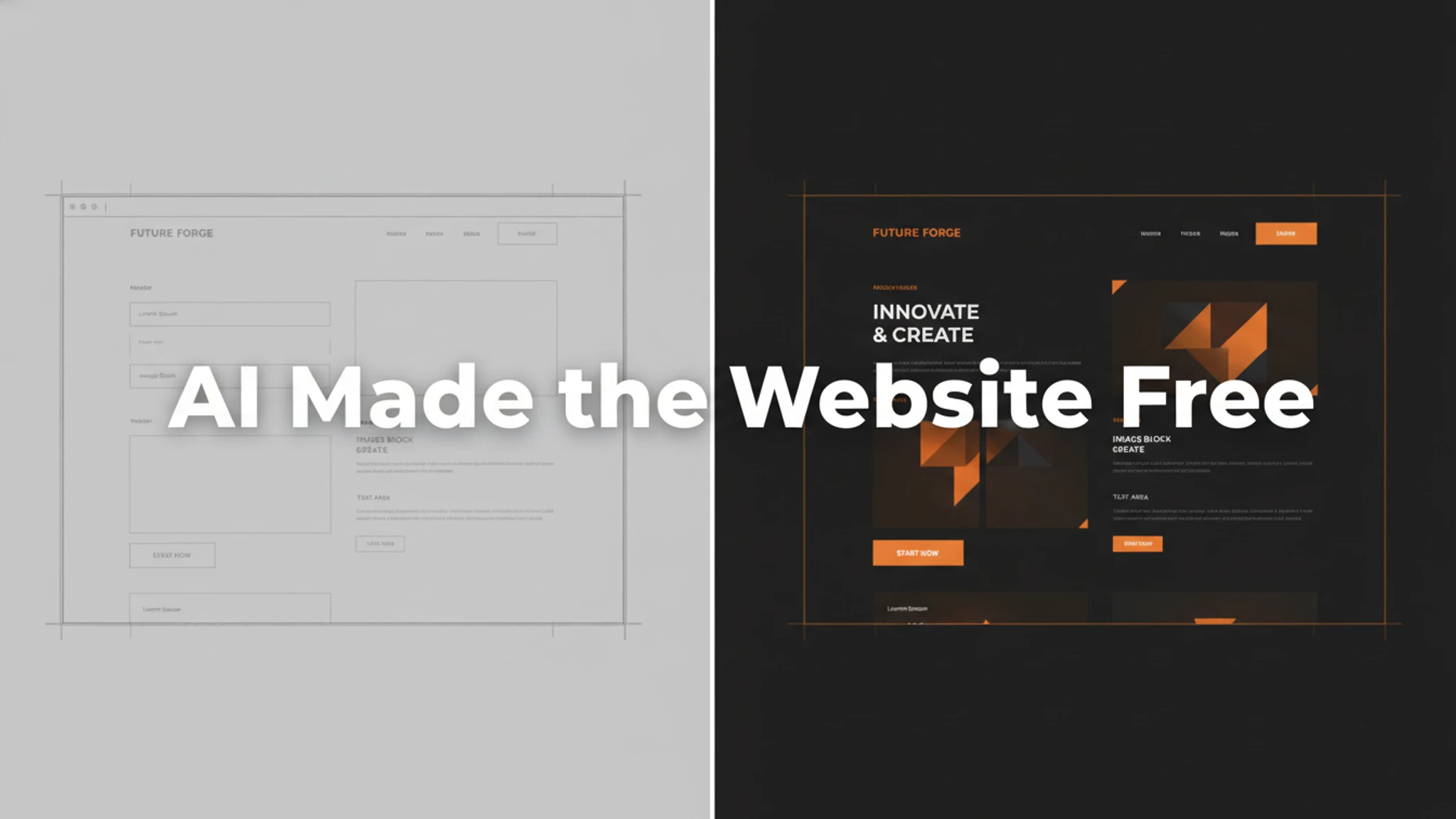
AI made the website free. It made everything around the website, the taste, the standard, the ownership, and the human who finishes it, the actual business.
You have an idea, or even a rough AI prototype? That is the hard part started. Send it over and we will build the version that actually works, for your business. Tell us your need.
Written by Bobby Dennie, founder of Rezult. Building the web since the raw-HTML days. [email protected]